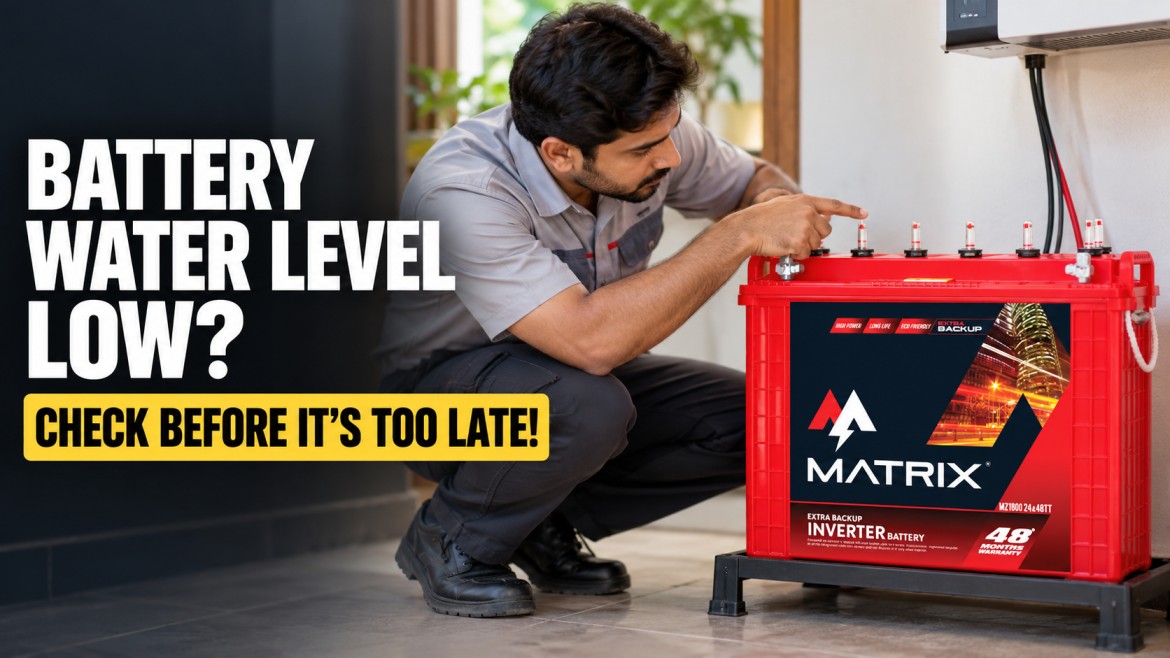
Inverter Battery Manufacturer in Hyderabad: Understanding Battery Water Level Indicators

An inverter battery can provide adequate backup for months; however, neglecting its water level might have a gradual impact on its efficiency. A reliable Inverter Battery Manufacturer in Hyderabad recommends checking water level indicators regularly on flooded lead-acid batteries. These tiny indicators assist in determining when the electrolyte levels require any attention to prevent the exposure of plates, avoidable damage, and replacing batteries unnecessarily.

It becomes particularly important to know what these indicators indicate for places which rely on inverter backup in case of frequent power failures.

What Is an Inverter Battery Water Level Indicator?

Water level indicators are simple devices that indicate the level of electrolytes in flooded lead-acid battery cells.

External float indicators have been adopted by many tubular inverter batteries as means of measuring the approximate level without having to open the battery.

The indicators function using a floating component whose movement depends on the level of the liquid.

How to Read the Indicator

The levels indicated by the meter include:

  • Minimum (MIN): The battery’s electrolyte level requires attention.
  • Maximum (MAX): The maximum level to which the battery should be filled.
  • Normal Range: The battery’s level falls within the acceptable range.

Always adhere to the markers that come with your own battery. The indicators will vary from one manufacturer to another.

Why Does Water Level Drop in Inverter Batteries?

Water loss occurs naturally while using certain flooded lead acid batteries.

As the battery charges, some water in the electrolyte separates into hydrogen and oxygen gases. The repeated charging process eventually causes the water level to go down.

The hot climate of Hyderabad may cause this process to become even more necessary.

But if the water loss occurs rapidly, there might be some problem with the battery’s charging voltage and temperature.

What Happens When Battery Water Becomes Too Low?

Electrolytes deficiency could cause exposure of the inner battery plates.

If the plates are exposed, there is possibility that they will wear off, resulting in less capacity and possibly irreparable damage.

One might observe decreased backup period or weird behavior of charging, but the reasons behind these symptoms can be varied.

The water level gauge indicates electrolyte deficiency, but does not give information about battery state or backup time left.

How to Check and Maintain Battery Water Levels

An Inverter Battery Manufacturer in Hyderabad with experience must offer instructions for battery maintenance based on the particular model of the battery.

These are some tips that need to be considered when servicing the flooded battery:

  • Turn off the inverter battery and disconnect it from the power source as per the manufacturer’s instructions.
  • Compare the position of the external indicator with its MIN and MAX marks.
  • In case the level is too low, read the instructions given in the battery manual before filling up.
  • Use only distilled or deionized water recommended by the manufacturer.

It should be noted that the battery shouldn’t be overloaded. In case of damaged indicator, professional help will be needed.

Usually, the flooded batteries are supposed to be filled up after their charging. It is not recommended to add water in case the plates are not covered before charging.

In addition, the acid cannot be added to the battery during routine water level control.

Common Mistakes That Can Damage an Inverter Battery

There are some battery problems that can be caused by basic maintenance errors.

Using tap water brings minerals to the battery that might influence its work. Overfilling is not good since electrolytes might start leaking out during charging.

Neglecting persistent low indicator is also one of them.

Also, users need to know that sealed VRLA, AGM, gel, and lithium batteries are not meant to be filled with water regularly.

Choosing Matrix Inverter Batteries in Hyderabad

Matrix Batteries provides invertor batteries for use in various situations.

The batteries provided by Matrix include several capacities.

Before purchasing such batteries, it is important to confirm its technology, capacity, maintenance, the presence of a water indicator, and suitability with your inverter.

Selecting the right batteries is just the start. Charging and maintenance are equally important factors.

Frequently Asked Questions

1. How Often Should I Check Inverter Battery Water Levels?

Checking approximately once a month is a useful starting point for flooded batteries. Follow the manufacturer’s schedule, as temperature and charging conditions affect water consumption.

2. What Happens If the Water Level Falls Below Minimum?

Low electrolyte can expose battery plates and cause damage. Arrange prompt inspection and follow the approved refilling procedure.

3. Can I Use Normal Drinking Water in an Inverter Battery?

No. Drinking water may contain minerals and impurities. Use distilled or deionised water as recommended by the manufacturer.

4. Why Does My Inverter Battery Need Water Frequently?

Frequent water loss may result from high temperatures, overcharging, or charging-system problems. Ask a technician to inspect the system.

5. Do All Inverter Batteries Have Water Level Indicators?

No. Water indicators are associated with serviceable flooded batteries. Sealed and lithium batteries generally do not require routine water refilling.

6. Can Low Battery Water Reduce Inverter Backup Time?

Yes. If low electrolyte causes internal plate damage, battery capacity and backup performance can decline.

Conclusion

Water level indicator is a small part, but it plays a crucial role in ensuring the flooded inverter batteries do not get damaged. It can be inspected properly, refilled and charged effectively.

Selection of Inverter Battery Manufacturer in Hyderabad needs to take into consideration certain things.

Investigate Matrix inverter battery models and pick a right choice for power backup purposes.
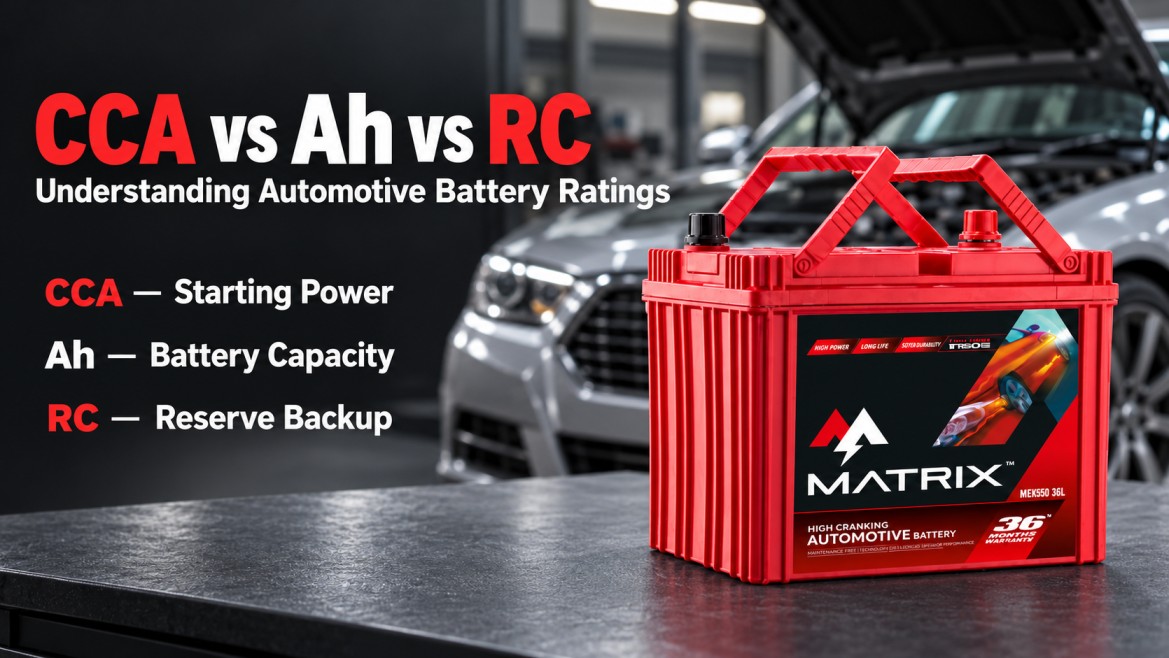
Automotive Battery Manufacturer in Hyderabad: Understanding CCA, Ah and Reserve Capacity

A car battery may be in top shape externally but find it hard to ignite the engine. However, this is mainly caused by selecting inappropriate battery specifications. Automotive Battery Manufacturer in Hyderabad supplies batteries that differ in their electrical specifications to fit different cars. It is important for the owners of vehicles and dealers to know CCA, Ah, and RC.

Why Battery Ratings Matter More Than Size ?

Even two car batteries which appear identical in size may give varying performance.

A little petrol-driven car and a commercial vehicle running on diesel may not require the same starting power. This is because the engines, the electrical system, and operating environment affect the choice of the battery used.

This is the reason why it is important to look at the label on the battery rather than buying one that can fit in the car.

What Is CCA in an Automotive Battery?

CCA stands for Cold Cranking Amps, which is the amount of current a battery in a fully charged condition can deliver for 30 seconds at -18°C without falling below a certain voltage level.

Hyderabad seldom sees such temperatures, but the measure is still relevant.

Why Is CCA Important?

Engine ignition requires high current for a short while.

A battery with a lower CCA rating may not perform well in starting the engine especially where the battery is old or the engine requires more force to start.

However, one does not need to choose batteries with the highest CCA ratings.

What Does Ah Mean in a Car Battery?

Ampere Hour (Ah): It gives an indication of the amount of electrical charge that can be delivered by the battery under the given conditions of discharge.

Thus, a 60Ah battery would be able to deliver 3 amperes for 20 hours under the given rated conditions of the battery.

Does Higher Ah Mean Better Starting?

Naturally not.

High value of Ah implies high charge capability, but the engine’s starting capacity also depends on the CCA and the overall condition of the battery.

It is necessary to consider both values when buying a new battery.

Understanding Reserve Capacity in Automotive Batteries

The Reserve Capacity (RC) of a battery measures how long a completely charged battery will maintain a 25 ampere output at about 27°C until it falls below a certain voltage level.

This is measured in units of time – minutes.

So a battery with a 100 minute reserve capacity will provide this load current for 100 minutes.

Why Does Reserve Capacity Matter?

Reserve capacity can be used as an indicator of the power storage capacity of a battery in case of the unavailability of the charging system.

Operating time, however, will depend on the electrical load and the battery itself.

This is not a guarantee that a car can keep running without any problem after alternator failure.

CCA vs Ah vs Reserve Capacity: Key Differences

Battery RatingWhat It MeasuresWhy It Matters
CCAStarting current at low temperatureEngine starting capability
AhElectrical charge capacityAvailable battery capacity
RCMinutes at a standard 25A loadReserve electrical supply

These three measurements describe different battery characteristics. They should be evaluated together with the vehicle manufacturer’s requirements.

How to Choose the Right Automotive Battery

Before you buy from an Automotive Battery Manufacturer in Hyderabad, ensure that the specifications of the required battery are known.

Consider the following:

  • Voltage required for the battery and its CCA
  • Ah of the battery recommended
  • Dimensions of the battery and the position of terminals
  • Charging compatibility of the battery with the vehicle
  • Battery warranty and its replacement terms

Start-stop vehicles require specific battery types such as AGM or EFB batteries.

Explore Automotive Battery Solutions From Matrix

Matrix Batteries produces automobile batteries for use in cars, tractors, and commercial automobiles.

Their range of automobile batteries features maintenance-free batteries that have been made using calcium alloy technology and are meant for cranking purposes.

One such battery is Matrix MXB900-41L, which has been provided with 90Ah rating. However, buyers need to inquire about CCA and reserve capacities separately since they are not the same.

Explore the Range of Matrix Automobile Batteries.

Frequently Asked Questions

1. What Is a Good CCA Rating for a Car Battery?

The correct CCA depends on the engine and vehicle specifications. Choose a battery meeting the manufacturer’s recommended starting-current requirement.

2. Is a 60Ah Battery Better Than a 45Ah Battery?

A 60Ah battery has a higher rated charge capacity, but suitability depends on the vehicle’s requirements, physical fit, and charging system.

3. Does Higher CCA Increase Battery Life?

Not directly. Battery life depends on charging conditions, temperature, construction, usage, and maintenance.

4. What Is the Difference Between Ah and Reserve Capacity?

Ah measures electrical charge capacity, while reserve capacity measures discharge duration under a standard 25A test load.

5. Does Hyderabad’s Hot Weather Affect Car Battery Performance?

Yes. High temperatures can accelerate battery ageing and water loss in applicable lead-acid designs, potentially reducing service life.

6. How Can I Select the Right Matrix Automotive Battery?

Check the vehicle manufacturer’s specifications and compare them with the selected Matrix model’s voltage, Ah, CCA, dimensions, and terminal configuration.

Conclusion

CCA, Ah, and Reserve Capacity give insights into the type of automotive battery you can use. They represent specific capabilities of the battery and none of them needs to be looked at individually.

When making decisions about which automotive batteries made by an Automotive Battery Manufacturer in Hyderabad are more appropriate, consider your vehicle first rather than higher ratings.

Check out automotive batteries made by Matrix.